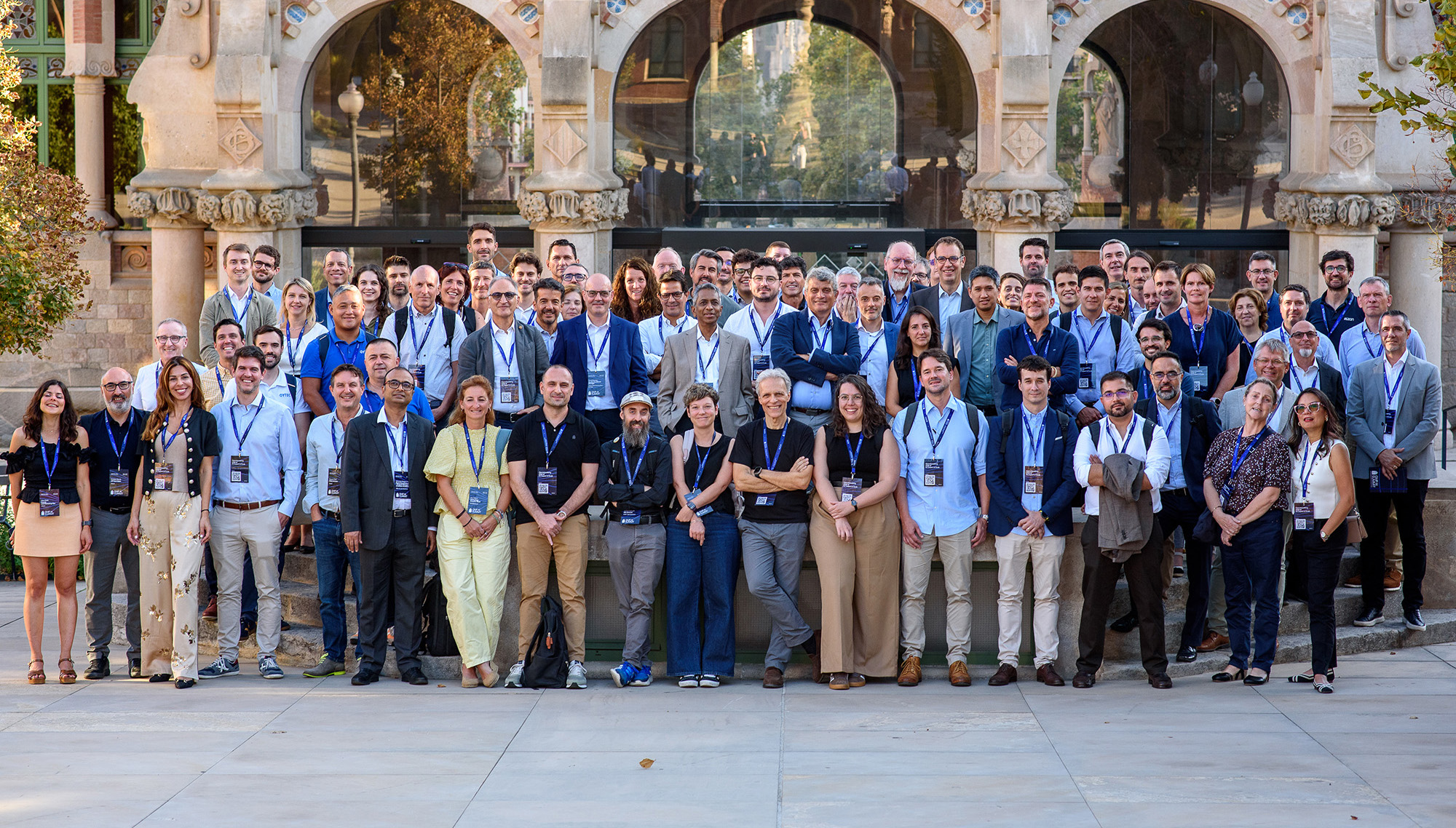
Eighty pharma manufacturing leaders spent a day in Barcelona on a single question: how do you actually operationalize AI under GMP? Aizon CEO Pep Gubau closed the day with three conclusions.
On September 14, the inaugural GMP AI Summit brought eighty pharmaceutical and CDMO manufacturing leaders to the Recinte Modernista de Sant Pau in Barcelona.
The agenda was built to resist abstraction. Sessions covered real-world use cases with P&L impact, data readiness for AI in pharma manufacturing, the new regulatory landscape, the pressures reshaping CDMOs, and how to prioritize use cases so they align with business needs. The day closed with three shop-floor stories from major manufacturers, each tracing a different route from paper to digital.
The conversations were pragmatic, nuanced, and eye-opening.
Closing the summit, Aizon co-founder and CEO Pep Gubau distilled the day into three takeaways:
1. People decide the outcome
The projects that succeed are the ones where leadership buys into the vision and empowered champions lead from the front. Technology is rarely what stops a program.
This reframes the usual diagnosis. When an AI initiative stalls in a GMP environment, the post-mortem tends to blame the model, the data pipeline or the validation burden. What the room described instead was an organizational failure mode: no executive sponsor with real authority, no named champion on the floor with the mandate to change how work gets done, and a pilot left to prove itself in isolation.
2. Winners are decided today
The teams moving AI into GMP production today are building an advantage over the ones still planning, and the gains first movers achieve in capacity, efficiency, accuracy and speed will compound fast.
Advantage in manufacturing does not arrive as a single step change; it accumulates. A team that has already operationalized one use case has something its peers do not: validated data foundations, a quality function that has been through the exercise once, and an organization that has seen AI work in actual production. The second use case is faster than the first, and the third is faster still. The distance between the teams deploying now and the teams still building business cases widens every quarter.
3. The barriers have come down
Skills, cost, implementation effort, time to a first result, and regulatory hurdles: all of them are lower than they have ever been.
Each of those barriers was significant not long ago, and each was a legitimate reason to wait. That has changed. The tooling no longer demands a team of in-house data scientists. The cost curve has fallen. Implementation timelines are measured in weeks rather than years. And the regulatory picture, which was the most cited reason to hold back, has moved from ambiguity toward a workable path, with GxP validation in production now a reality.
Real Numbers, Real Setbacks, Real Results
Thank you to everyone who joined us in Barcelona. What made the day work was the willingness of the people present to share real numbers, real setbacks and real results. That is rare in this industry, and we do not take it for granted. The appetite in the room made one thing clear: this conversation is not finished. See you at the next one!


